 Cole, Joanna. The Magic School Bus At the Waterworks.
Synopsis: The students in Ms. Frizzle's class were disappointed because they had gotten the "strangest teacher in school." She dressed weird, acted weird, and according to the students, they never did anything or went anywhere fun. Until Ms. Frizzle announced their month long research about how their city gets water, and once they were finished they were going to take a field trip to the waterworks!! The field trip was quite out of the ordinary. Students turned into water droplets, fell from the sky, and even got to swim through the water pipes under their city! Once back in the classroom, they mapped out a water chart of what they learned and acted as if nothing strange had ever happened.
Strategy Connection: This book would be great for a retelling activity. Retelling is only one of the many forms of summarizing and synthesizing strategies that teachers could use with their students. The book works well with a retelling activity because there is a lot of important information about the waterworks and how cities get their water. A student would be able to show the teacher what they learned because of how well the book is laid out and presents the story and information. The book is short and interesting which is another reason why retelling would be a great way to summarize and synthesize what was read.

Volzar, David. Yo, Hungry Wolf!
Synopsis: This is a book combining three classic fairy tales, Little Red Riding Hood, The Three Little Pigs, and The Boy Who Cried Wolf. The wolf in the story desperately tries to find something to eat, and along the way, he meets up with a stubborn red riding hood, three mean pigs, and a young boy who is in over his head with his donut business attempt. He fails to get anything to eat until the very end of the book. The wolf takes advantage of the young boy because nobody believes him that a wolf is really in his store. Once satisfied, he goes home and dreams of getting his next meal!
Strategy Connection: The teacher of the classroom could read this book aloud to his/her students. Once read, the students could do a summarizing and synthesizing activity called comparing and contrasting. This book would be perfect for that activity because of the combination of the three fairy tales. Students could use a piece of white computer paper and divide into three different sections in order to compare and contrast the three different fairy tales. Comparing and contrasting would allow the students to remember the main events and what the story was about. This activity could replace something irrevelant such as a paper or worksheet because it would show what the students learned from the story.

Synopsis: This is a very popular book in which many young children learn how to read with. The book tells of a baby bird who hatches to find his mother not in the nest with him because she is out in search of food. She does not return right away so he decides to go and find her. He comes in contact with a kitten, a cow, a dog, a plane, a boat, and much more. He soon finds out that none of them are his mother. Fortunately, he gets picked up by a "snort" which returns him to his nest. Soon after his arrival, his mother lands in the nest beside him. She asks her baby who she is, and he replies that she is his mother. The baby bird and mother are back together at last!
Strategy Connection: With this book, students could summarize and synthesize by writing what the story meant to them and how it made them feel. This gives them a chance to recall what the story was about and to share their personal ideas and comments as well. Summarizing not only means to show what you learned from what you read, but it also means to break a reading/book apart and relate it to yourself or what you already know. Again, this strategy replaces something boring such as a worksheet or quiz that, often times, teachers do after a book has been read. Students learn to look deeper into texts and do something with them.
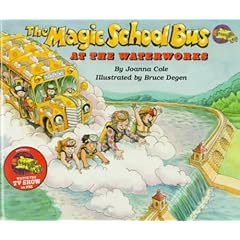 Cole, Joanna. The Magic School Bus At the Waterworks.
No comments:
Post a Comment