Wednesday, October 29, 2008

Summarizing and Synthesizing Information


Timothy and the Strong Pajamas
By: Vivian Schwarz
Synopsis:
Timothy likes the idea of being strong and having powers to help people. He realizes his super strengths when he puts on his newly sewn up pajamas. He uses
his super strength to do good deeds and is willing to help anyone who needs him. Timothy doesn't realize who really helps him in need until he rips his pajamas and all the people who he helped ended up helping him get a lift home. The real hero turns out to be Timothy's mother who fixes the pajamas!

Determining Importance Connection:
For this connection you can have the students use their folded sheet of paper that has, "What the piece is about" on the left side and the other side having, "What it makes me think" Have the students fill out the what it makes me think side first and then the what the piece is about side lastly. It is important for the students to make a connection with the text before figuring out the summary. Making the connection uses deeper meaning and is more important.

Today I Feel Silly By: Jamie Lee Curtis
Synopsis:

This book focuses solely on the moods that children may sometimes feel. It has a creative way of describing each mood. A little girl goes through all these silly little moods and describes what she does when she feels a certain mood.

Determining Importance Connection:
For this connection you can have the students use their folded sheet of paper that has, "What the piece is about" on the left side and the other side having, "What it makes me think" Have the students fill out the what it makes me think side first and then the what the piece is about side lastly. Have the students try and recall a time when they felt silly or felt a certain mood and what did they do? Then have them summarize what the story was about.
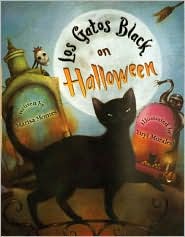
Los Gatos Black on Halloween By: Marisa Montes
Synopsis:
This book does a great job of illustrating a spooky Halloween theme with very exciting but spooky illustrations. All the typical Halloween characters come out Halloween night to have a party till some very scary intruders come crash the party and tell some very scary tales!

Determining Importance Connection:
Use the strategy "How reading changes thinking" pg. 183 and have the children talk about what they think the story may be about before reading the text. Afterwards have the children write out or discuss how their thinking evolved after reading the story.


Jenny Yearby's Determining Impotance Text Set


Synopsis: This non-fiction book is a great text for children to relate to because it is all about the lives of actual children. This book tracks voyages of Vikings from long ago. Vikings settled in places like Norway, Denmark, and Sweden. Children from these different places are introduced throughout this text and one is able to see the similarities in their Viking traditions. They are all grandchildren of Vikings whose backgrounds are very similar. This book has amazing photographs of these children and landscapes of where they live, as well as maps to show where these places are located.

Determining Importance Connection: For this text I would use the strategy, "Finding Important Information Rather Than Just One Main Idea" (p 166). This is when the students mark important information in the book with sticky notes. This is probably my favorite strategy because children are challenged to constantly be thinking and comprehending what they are reading. Children can even write what they were thinking when they read the idea on the sticky note so they may discuss with their peers or teacher why they put a sticky note in that spot.


Tiger Math: Learning to Graph from a Baby Tiger by Ann Whitehead Nagda and Cindy Bickel


Synopsis: This is a non-fiction book about a Siberian tiger, T.J., born in a zoo in Denver, Colorado. This book is unique in that all of the pages on the right tell the story of the tiger cub, and the pages on the left show graphs, including picture graphs, circle graphs, bar graphs, and line graphs, to help tell the story of T.J. As a young cub, his mother died, which would make it hard for T.J. to get proper nutrition. He would not eat anything for a long time, but when he finally did, he grew to be a beautiful, healthy tiger.

Determining Importance Connection: For this text I would use the strategy, "Important to Whom?" (p 167). In this strategy, students find what they believe to be the most important ideas of the text. When they find a main idea in the book, they underline this sentence or paragraph. Next, the student will be able to write down what they believe the author wanted to teach them. I believe this text is a great book for this strategy because it is possible children will come up with several different main ideas. Then, this gives the opportunity for children to really discuss what they have written down and see how their responses may be similar or different from their classmates.


Synopsis: This book is a great non-fiction text all about ancient Egypt. It has actual pictures and transparencies of the pyramids, tombs, hieroglyphs, mummies, etc. The text gives in depth information about topics from what life was like on the Nile River in ancient Egypt, to animal gods, to mummification and what ancient Egyptians believed happened in the after life.

Determining Importance Connection: For this text I would use the strategy, "Determining What's Important When Writing Information" (p 162). Students would be able to read this text and see what good informational, non-fiction books look like. The children would choose a topic of their own they wanted to write a non-fiction book about. When writing a book like this, it is essential for the author to be an expert on the subject. This would be a great activity for students to understand the importance of becoming experts on their subject of choice.


Tuesday, October 28, 2008

Margot Bopp's Visualizing and Inferring Annotated Bibliography


Lakin, Patricia, and Scott Nash. Beach Day! New York: Dial, 2004.
This book is about four friends that decide it is the perfect day to go to the beach. It includes their journey to get to the beach by using one word expressions and illustrations that show many different expressions on their faces. Throughout their journey they participate in fun activities such as: going to the park, playing in the sun, and building sand castles. It is a book that is very relatable to young readers and is also a fairly easy read for young readers.

Strategy Connection: This book could be used for the strategy, “Creating Mental Images That Go Beyond Visualizing.” The reader could read the book and look at the illustrations to answer the questions: I see…, I hear…, I can feel…, I can smell…, and I can taste… The students could then write their own story using the, I see…, I hear…, I can feel…, I can smell…., and I can taste… It allows young readers to rely on their own senses to understand and make sense of the book they are reading.


http://www.amazon.com/Beach-Day-Karen-Roosa/dp/0618029230/ref=sr_1_2?ie=UTF8&s=books&qid=1223611512&sr=1-2Beach-Day-Karen-Roosa/dp/0618029230/ref=sr_1_2?ie=UTF8&s=books&qid=1223611512&sr=1-2


Malkin, Michele, and Michele Malkin. Pinky's Sweet Tooth. New York: Penguin Group (USA) Incorporated, 2003.

This book is about a niece that is helping her aunt who owns a bakery to win the Bake Off Contest at the County Fair. The aunt is a very popular baker in the town that is known for her tasty and creative cakes and desserts. Throughout the book the aunt wants to come up with a creative cake that will win the Bake Off Contest at the County Fair. The niece helps the aunt by asking people throughout the town their opinions and giving her own opinions. The aunt ends up bringing a gigantic cake that is made of all the people’s favorite cakes. The aunt wins the contest! .

Strategy Connection: This book has many amazing pictures that would help the reader to develop mental images and create inferences. This book is a food related book and has many in depth descriptions of different types of deserts making it a great book to use for the strategy, “Creating Mental Images That Go Beyond Visualizing.” The reader could read the book and look at the illustrations to answer the questions: I see…, I hear…, I can feel…, I can smell…, and I can taste…


Thompson, Lauren, and Jonathan Bean. The Apple Pie That Papa Baked. New York: Simon & Schuster Children's, 2007.

This book describes the steps that occurred in nature to create “Papa’s apple pie”. The book has a very simple and repetitive way to explain to the reader that “Papa” gets the apple from the apple tree, that needs water to grow, the water comes from the clouds, etc. This book brings what happens in nature to a very simple concept such as making a pie. It allows the reader to learn how a tree grows and how apples are made that are then used to create the pie.

Strategy Connection: The repetitive nature would make it very easy for a beginning reader to understand and visualize. Therefore making it a great book to use for a visualizing activity such as: Sketch to Stretch. The students could read this book and not look at the pictures and then create pictures that go along with the text. The students could also simply look at the pictures and create a story that goes along with the illustrations. This book allows the students to use their creativity and imagination to create both a story and illustrations.

http://www.amazon.com/Apple-Pie-That-Papa-Baked/dp/1416912401/ref=sr_1_1?ie=UTF8&s=books&qid=1223611084&sr=1-1


Monday, October 27, 2008

Question about the LAP

I was thinking about the LAP project and I came across a couple of questions. How do you want the LAP to be turned in? Right now I am typing all of my responses (reading interview, retelling) on the computer and printing them out. Will that be ok? And how we will turn in the running records? Is it ok to have them hand-written? It would be hard to have those corrections typed up. I am just trying to get a mental picture of how the LAP will look.

Amanda's Text Set- Visualizing & Inferring


The night before a young girl plays her first soccer game of the season; her father tells her a story about his own first season playing soccer. His mother acted like all the other parents cheering on their children at the soccer game but she started to act differently and began to look like a pickle. His mother began to yell and roar whenever the team would score a goal, she was turning into an alien!


Strategy Connection: This book pertains to this strategy by having the students cover up the words on the pages and make their own predictions and meaning of the story from the pictures. Once the students created their own meaning, they would uncover the words and read the story to see how their interpretation compared with the actual story. This books has some great pictures that would really get the students thinking and really use their imagination. This is a great text to use for this strategy. Students would enjoy seeing how their own meaning relates to what the author wrote.


Saltzberg, B. Crazy Hair Day


Stanley Birdbaum is so excited for crazy hair day at his school. He has rolled and wrapped and dyed his hair. He has dipped it and sprayed it and made it pretty much perfect for this special day. He is ready to celebrate crazy hair day at school. But when Stanley enters the classroom, he comes to find that crazy hair day is . . . next week. What makes this situation even worse is that today is school picture day!


Strategy Connection: This book would be good to use during a sketch to stretch. Children usually always can think of a time when something bad has happened to them at school and they were embarrassed. This book would be good for the teacher to read to the students and then have them use their prior knowledge and sketch a time in their life when they felt the same way as Stanley. This book gives good detail before and during the event so there is a lot of description which would really get the students engaged in their own drawings and understandings. If the students did not have an even that related to this particular book, they could think of another book or maybe even a particular page or part in this book that they would like to sketch.


Mr. Tiffin asks his class “How many seeds in a pumpkin?” as they all gather around the small, medium, and large pumpkins in the classroom. Robert, the biggest kid, guesses that the largest one has a million seeds; Elinor, sounding as if she knows all, suggests the medium one has 500 seeds; and Anna, who likes even numbers better than odd ones, guesses that the little one has 22. Charlie, the smallest boy in the class, doesn't have a guess. Counting pumpkin seeds is quite confusing as well as messy. But once the job is done they found that the smallest pumpkin had the most seeds!
Strategy Connection: This book would be great to have the students use their different senses when reading or listening to the story. Most students can probably recall a time when they carved pumpkins and began counting the seeds. When fall comes, there is a certain smell that comes too. Studnets should use their senses to recall smell, taste, sight, feeling and hearing when reading this book about pumpkin seeds. Students will better connect with the story by using this strategy and become more engaged in the learning.


Sunday, October 26, 2008

Kourtnee's Determining Importance Text Set


Sis, Peter. Train of States. Harpercollins Childrens Books, 2007.

http://www.amazon.com/Train-States-Peter-Sis/dp/0060578386

Book Synopsis: This book would be a great book to introduce to the class for a social studies unit. The author designed it so that the train cars each represent one state. The train cars are arranged in the order the state was added to the union. All the train cars are unique in its own way with its own page. The author creatively teaches the reader each states capitol, state flower and random other facts about the state that a lot of individuals may not already know like flowers, birds, trees and nicknames.

Determining Importance Connection: With this book I would use a strategy called "Important to Whom?" (p 167). This is when you have the students read the book and chose what they think is the most important or the main idea of the book. Then have the student draw a line under that response and write down what they think the author wanted them to learn and remember. Sometimes they write down the same responses, but other times their answers are very different.


Jones, Lynda. Five Brilliant Scientists. New York City, NY: Cartwheel Books, 2000.

http://www.amazon.com/Great-Black-Heroes-Brilliant-Scientists/dp/0590480316

Book Synopsis: This book is an informational text for primary students about the achievements of five black scientists. It discusses their early lives as well as how they came to be successful. Susan McKinney Steward was the first black female doctor in New York State. George Washington Carver is a world famous agricultural scientist. Ernest Just was a marine biologist. Percy Julian was a chemist and Shirley Jackson was a nuclear physicist. Loved the illustrations in this book!

Determining Importance Connection: With this book I would use a strategy called "Finding Important Information Rather Than Just One Main Idea" (p 166). This is when the students use three sticky notes labeled with an asterisk (*) to mark three important ideas in the text. Because this book discusses multiple people I would allow them to use three sticky notes per person but they would have to be able to defend their stance and explain their thinking behind their decision for choosing the three things they chose to put a sticky note on.


Penny, Malcolm. Talking About Our Environment. Heinemann/ Raintree, 1999.

http://www.amazon.com/Our-Environment-What-Think-About/dp/0750224916/ref=sr_1_1?ie=UTF8&s=books&qid=1225049136&sr=1-1.

Book Synopsis: This book could be used for primary aged students. It discusses the current environmental problems we are facing in the world. For example it mentions recycling, disposing waste and waste products and preserving our natural resources. It teaches children what they can do to help out and play their part so things can progressively change for the future.

Determining Importance Connection: With this book the students could use a strategy called "Becoming Familiar with the Characteristics of Nonfiction" (p 161). This is when you take the topic (which with this book would be the environment) and write down the facts they already know about the topic. Next they make a list of questions/wonderings they want to ask before they do their research or read the book. Lastly the students make a list of 5 new facts they learned as they read. They can also draw illustrations like real authors do.

Katy's Text Set for Summarizing and Synthesizing


http://www.santaclaracountylib.org/kids/lists/images/nino_mask.gif

Winter, Jeanette. Nino's Mask. New York: Penguin Putnam Inc, 2003.

Book Synopsis: Nino is a little boy who wants to wear a mask in a fiesta that his village is having. The mask is not only something that the person wears, in a sense, they become the creature that is on their mask for that day. Eventually he gets to wear the mask of the dog, and he is credited with the corn growing in his village. At the end of the text, there is a glossary of Spanish words that were used in the text, and information on why masks are so important in Latin America, and what they use them for.

Strategy Connection: This strategy helps students to understand that things such as masks, that are not important to them, are often used by other cultures as a tradition. I would ask the students to write answers to the question, what are masks used for, in their reading logs before reading Nino's Mask. After reading the book, I would have students revisit their answers, and write down their changed thinking on the subject.


Wiles, Deborah. Freedom Summer. New York: Simon & Schuster, 2001.


Book Synopsis: Two young boys named Joe and John Henry are best friends, and do everything together one summer. There is only one difference between them, Joe is white, and John Henry is black. They would like to do everything together, but since John Henry is black, he is not allowed to do many of the things that Joe is because of segregation. Then, the boys find out that there is a law forbidding segregation passed, and that the public pool is to be open to everyone. When they both race to the pool out of excitement, John Henry is still not allowed to go in, showing that people must also change their opinion, and the law does not always make a difference.


Strategy Connection: This is a great book for students to use to track their changed thinking on a topic because most students do not see something such as the color of their skin as a factor that determines friendship, or things that they can do together. I would ask the students a question such as, how do you and your friends decide what to do for fun together? Students would write down their responses in their reading log under before reading, and then I would allow them to read the book. They would then write their changed thinking about reasons that friends might decide what do for fun together based on things that they have learned in the book. Many young children do not realize that black children were not allowed to do the same thing as white children, and this book is a great way to help students change their thinking in an age appropriate way.


http://www.amazon.com/Kumaks-Fish-Tall-Tale-North/dp/0882405845/ref=sr_1_1?ie=UTF8&s=books&qid=1225044438&sr=1-1


Bania, Michael. Kumak's Fish: A Tale Tale from the Far North. Portland: Alaska Northwest Books, 2004.


Book Synopsis: Kumak and his family decide to go fishing on a beautiful day. They plan on catching lots of fish for everyone to eat, most of them do, except for Kumak. He cannot seem to catch a single fish, until he feels a great tug on his line. He pulls, and pulls, but can never get the fish out of the hole that he has made in the ice. Eventually all of his family begins tugging on the line with him, and what they thought was a large fish finally emerges from the ice hole. When they see it, they realize that it is many fish attached to the line, and they have a great feast. This book also contains an author's note about the people who live in Northern Alaska, and the importance of fish to the community.


Strategy Connection: This is a good book to use for synthesizing information from a text. Students would write down, before reading the book, why they go fishing. After writing down their answer to this question, they will read the book, and write down their changed thinking about why they go fishing in their reading log. After doing this, the students will be able to discuss why fishing could be important to certain cultures, and be more than just a fun sport for people to participate in.